
Forensic VR
Practical training is a crucial part of forensic education, yet access to real crime scenes is limited and often difficult to organize. To help students gain hands‑on experience in a safe and accessible way, we created Forensic VR, an immersive virtual reality learning tool for university students.
Forensic VR allows students to step inside a virtual crime scene and experience the role of an investigator.

The project was created by our Research Assistant and VR engineer, Dmitrii Vasilev, as part of our educational and research activities, with concept development and beta testing carried out by PhD student Anna (Kira) Kirsanova. Students enter a realistic apartment where a fictional crime has taken place. Before beginning the investigation, they receive a briefing from an NPC-police officer, introducing the case and emphasizing the importance of following correct procedures.
Inside the apartment, students can freely explore their surroundings. The crime scene includes realistic forensic traces such as fingerprints, shoe prints, bloodstains, strands of hair, personal belongings, and a victim’s body with simulated wounds. This encourages students to think critically about what evidence may be relevant and how different traces relate to each other.
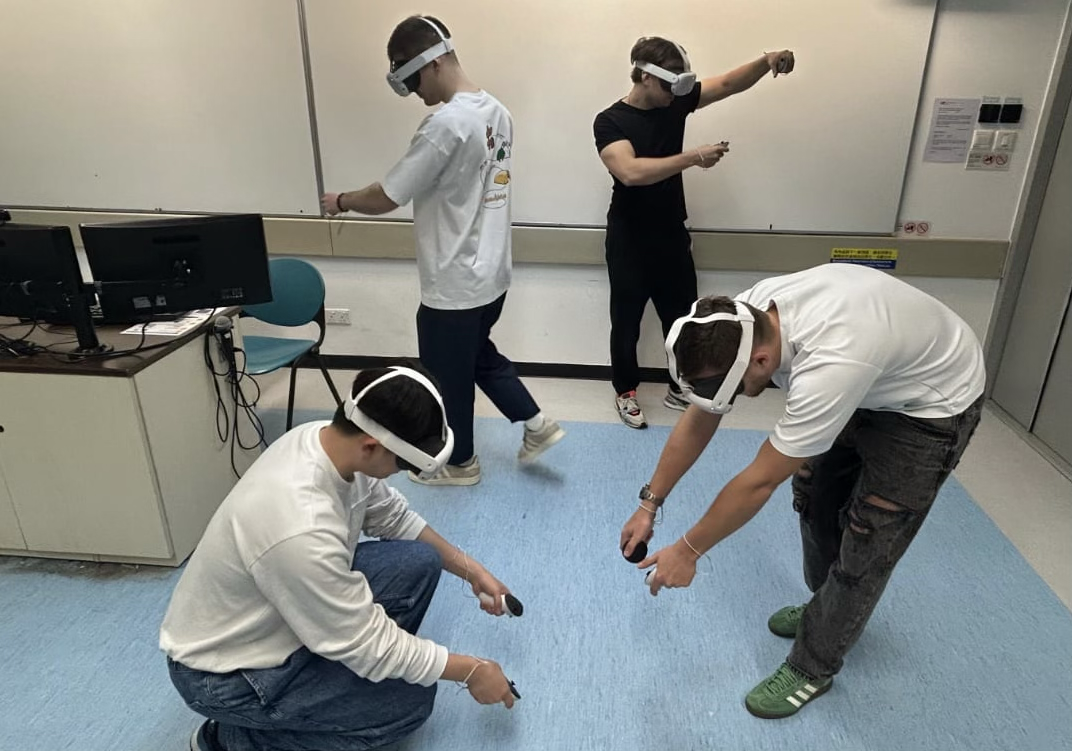
Hands‑on interaction is a central part of the experience.
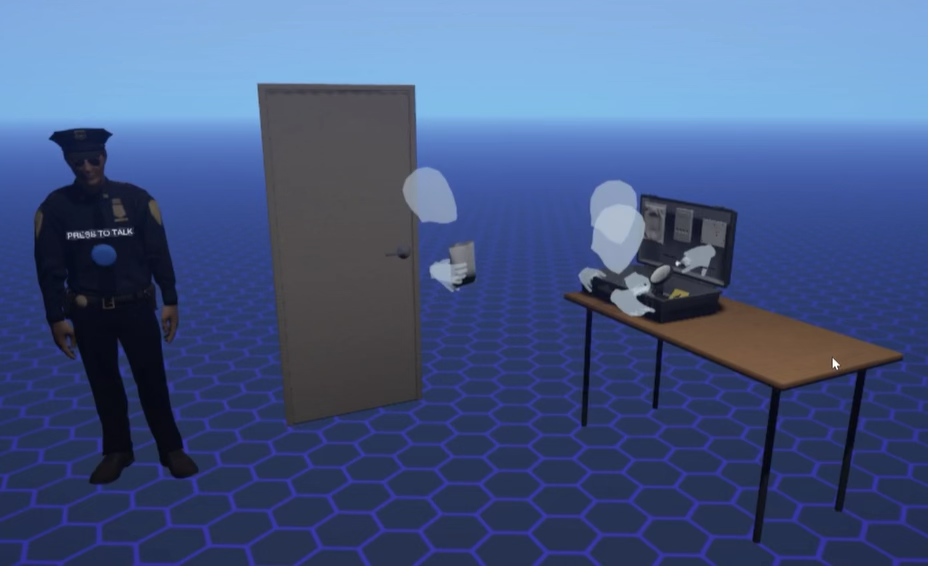
Students are provided with a virtual forensic toolkit stored in a black suitcase. It contains commonly used tools such as evidence markers, measuring instruments, a camera, gloves, evidence bags, tweezers, and fingerprint collection materials.
Interested in Forensic VR or potential collaboration? Feel free to contact us to learn more.